Blog · Case study
AI Agents in the Enterprise: Building Smarter ERP Dashboards with Purpose Built Tools
🚀
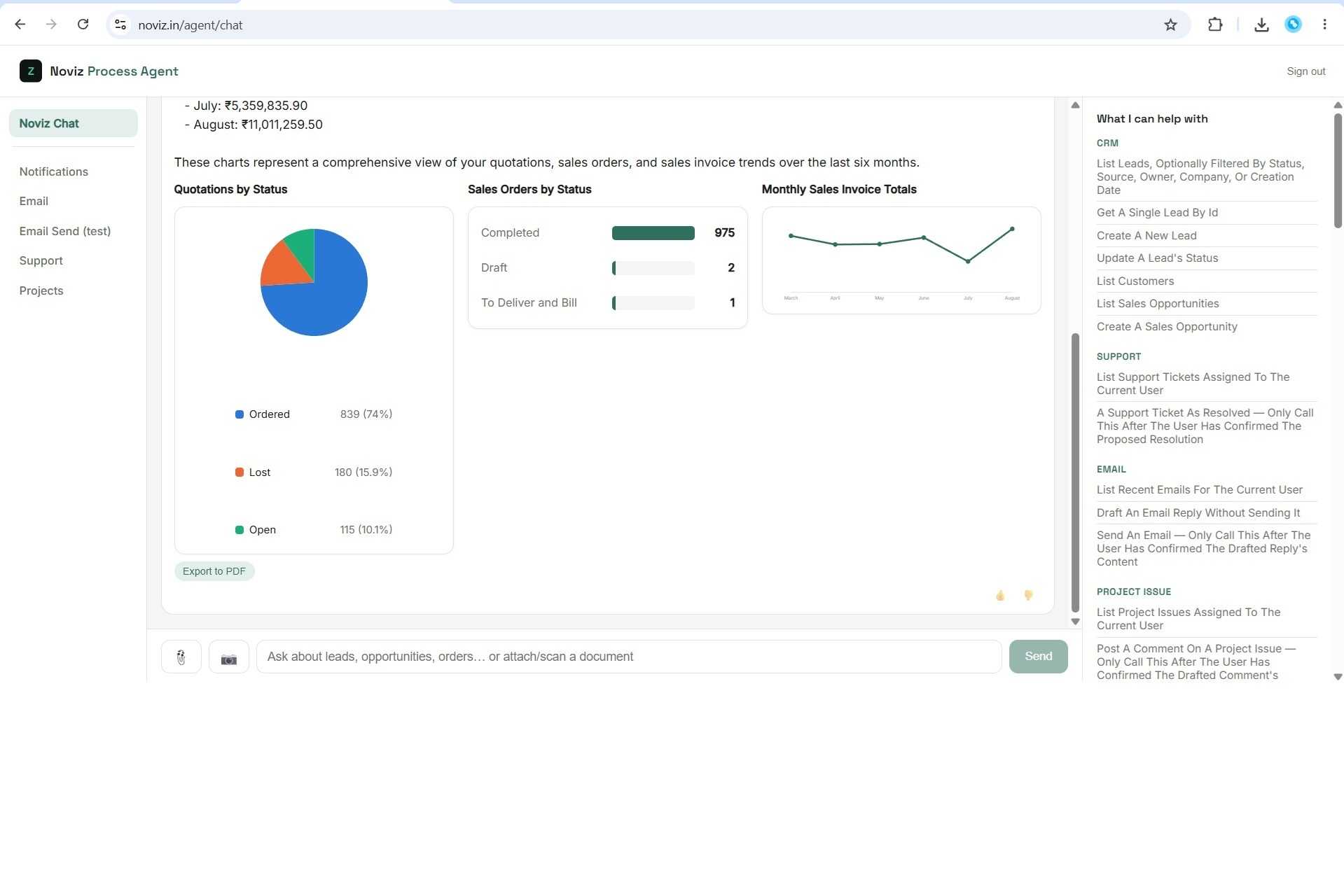
One of the new capabilities we’ve been working on in our ERP AI agent is 𝗔𝗜 𝗴𝗲𝗻𝗲𝗿𝗮𝘁𝗲𝗱 𝗱𝗮𝘀𝗵𝗯𝗼𝗮𝗿𝗱 𝘃𝗶𝗲𝘄𝘀, allowing users to describe the view they need and letting the agent construct it from the underlying ERP data.
The key challenge wasn’t simply getting an LLM to generate a dashboard.
It was making the generation 𝗮𝗰𝗰𝘂𝗿𝗮𝘁𝗲, 𝗰𝗼𝗻𝘀𝗶𝘀𝘁𝗲𝗻𝘁 𝗮𝗻𝗱 𝗲𝗳𝗳𝗶𝗰𝗶𝗲𝗻𝘁.
We addressed this by defining 𝗽𝘂𝗿𝗽𝗼𝘀𝗲 𝗯𝘂𝗶𝗹𝘁, 𝘁𝘆𝗽𝗲𝗱 𝘁𝗼𝗼𝗹 𝗰𝗮𝗹𝗹𝘀 around the actual operations required to build a dashboard.
The LLM orchestrates the workflow, while the tools handle the deterministic work.
🔹 𝗙𝗲𝘁𝗰𝗵
Retrieves and aggregates the required ERP data through operations such as 𝗴𝗿𝗼𝘂𝗽𝗕𝘆, counts, sums, correlations and other supported aggregations.
🔹 𝗦𝗵𝗮𝗽𝗲
Converts those results into a validated chart and view specification. Server side calculations, category limits and structural constraints are handled outside the model.
🔹 𝗥𝗲𝗻𝗱𝗲𝗿
Converts the validated specification into the actual dashboard components and desktop view.
This gives the LLM a more precise responsibility.
Rather than asking the model to retrieve data, calculate metrics, design charts and implement the UI in a single generation, it determines 𝘄𝗵𝗶𝗰𝗵 𝗼𝗽𝗲𝗿𝗮𝘁𝗶𝗼𝗻𝘀 𝗮𝗿𝗲 𝗿𝗲𝗾𝘂𝗶𝗿𝗲𝗱 and orchestrates the corresponding tool calls.
For example:
𝗖𝗿𝗲𝗮𝘁𝗲 𝗮 𝘀𝗮𝗹𝗲𝘀 𝗱𝗮𝘀𝗵𝗯𝗼𝗮𝗿𝗱 𝘀𝗵𝗼𝘄𝗶𝗻𝗴 𝗼𝗿𝗱𝗲𝗿 𝘀𝘁𝗮𝘁𝘂𝘀, 𝘁𝗼𝗽 𝗽𝗿𝗼𝗱𝘂𝗰𝘁𝘀 𝗮𝗻𝗱 𝗺𝗼𝗻𝘁𝗵𝗹𝘆 𝘀𝗮𝗹𝗲𝘀 𝘁𝗿𝗲𝗻𝗱𝘀.
The agent can fetch the required datasets, shape each visualization and compose the resulting components into a single desktop dashboard.
We tested the approach against real dashboard generation, focusing on 𝗮𝗰𝗰𝘂𝗿𝗮𝗰𝘆, 𝗲𝘅𝗲𝗰𝘂𝘁𝗶𝗼𝗻 𝗲𝗳𝗳𝗶𝗰𝗶𝗲𝗻𝗰𝘆 and 𝗰𝗼𝗻𝘀𝗶𝘀𝘁𝗲𝗻𝗰𝘆.
One important finding was that reducing the implementation burden on the LLM can improve the result.
The model focuses on 𝗶𝗻𝘁𝗲𝗻𝘁 𝗮𝗻𝗱 𝗼𝗿𝗰𝗵𝗲𝘀𝘁𝗿𝗮𝘁𝗶𝗼𝗻, while deterministic operations are handled by tools that can be validated and tested independently.
Another important aspect is 𝗧𝗼𝗼𝗹 𝗖𝗼𝘃𝗲𝗿𝗮𝗴𝗲.
In several cases, the model correctly identified the required operation, but the corresponding ERP entity or capability was not exposed through the tool layer.
This is the direction we’re taking with the new dashboard capabilities:
𝗡𝗮𝘁𝘂𝗿𝗮𝗹 𝗹𝗮𝗻𝗴𝘂𝗮𝗴𝗲 𝗶𝗻𝘁𝗲𝗻𝘁 → 𝗽𝗿𝗲𝗰𝗶𝘀𝗲 𝘁𝗼𝗼𝗹 𝗰𝗮𝗹𝗹𝘀 → 𝘃𝗲𝗿𝗶𝗳𝗶𝗲𝗱 𝗱𝗮𝘁𝗮 𝗼𝗽𝗲𝗿𝗮𝘁𝗶𝗼𝗻𝘀 → 𝗰𝗼𝗺𝗽𝗼𝘀𝗲𝗱 𝗲𝗻𝘁𝗲𝗿𝗽𝗿𝗶𝘀𝗲 𝗱𝗮𝘀𝗵𝗯𝗼𝗮𝗿𝗱.
𝗜𝘁 𝗶𝘀 𝗮𝗯𝗼𝘂𝘁 𝗴𝗶𝘃𝗶𝗻𝗴 𝘁𝗵𝗲 𝗟𝗟𝗠 𝘁𝗵𝗲 𝗿𝗶𝗴𝗵𝘁 𝗮𝗯𝘀𝘁𝗿𝗮𝗰𝘁𝗶𝗼𝗻𝘀 𝘁𝗼 𝗱𝗼 𝗶𝘁𝘀 𝗽𝗮𝗿𝘁 𝗽𝗿𝗲𝗰𝗶𝘀𝗲𝗹𝘆.
AI #AIAgents #LLM #EnterpriseAI #ERP #SoftwareEngineering #DataViz #OpenSource
Read the original on dev.to → · Read the original on Frappe Forum →